Connection
Revitalisation of the ramparts in Soest
The redesign of the Soest ramparts combines history, design and function. The result is an urban space that not only preserves its historical significance, but also meets modern requirements for quality of stay, accessibility and mobility. The special appeal lies in the careful redevelopment of a centuries-old urban element that still shapes the character of Soest today.
With its well-thought-out development concept, the ramparts are becoming a place of dialogue between the past and the present. The aim is to preserve historical substance while creating sustainable, functional solutions for public spaces. The design elements used – from furniture to information pillars – have been deliberately designed to be uniform and blend harmoniously into the overall picture without overshadowing the individual characteristics of each section.
The project is intended to respond to a wide range of requirements: it should offer space for recreation, exercise, orientation and encounters in equal measure – a green belt linking the old town, natural space and mobility network. With its high design and technical quality, the implementation sets new standards for the enhancement of listed open spaces in an urban context.
Urban space with history – development concept for the Soest ramparts
The Soest ramparts have existed in various forms since the 12th century and surround almost the entire historic city centre. For almost 200 years, it has been an integral part of Soest's urban space as a publicly accessible green space. The city fortifications, which are now listed as a historical monument, continue to play an important role in local recreation in the city centre and are part of the everyday routes for cyclists and pedestrians in Soest. In order to ensure that this remains the case in the future, the city council adopted the Wall Development Concept (WEK) in 2015 with the aim of preserving the historic monument for future generations and creating high-quality public green spaces and open areas. In 2016, nts Ingenieurgesellschaft mbH took over the planning for the redesign and is implementing it step by step. Financed with support from the Integrated Urban Development Concept (ISEK) for the old town, which was adopted in 2013, the ramparts, the city wall and the moat in front of it are currently being renovated in various construction phases. Completion is planned for 2031.
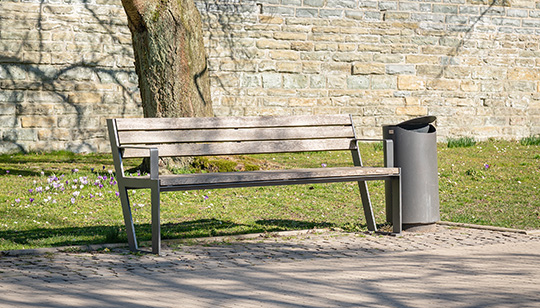
Unity in diversity – furnishing concept along the Soester Wall
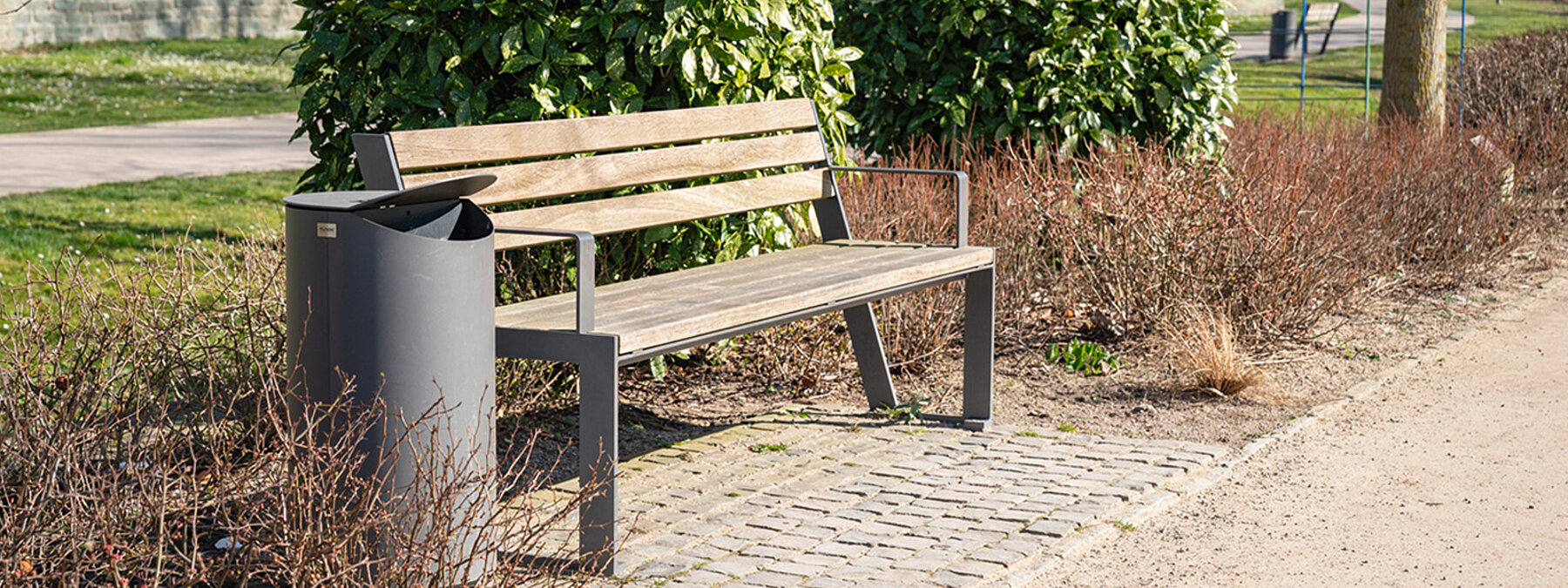
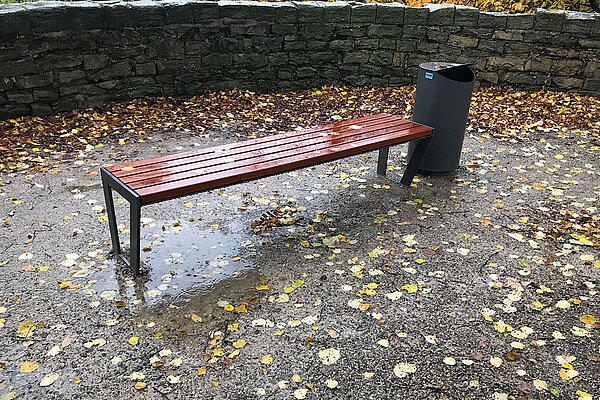
One of the central aspects of nts' design is to connect the individual sections of the wall to form a uniform, coherent space that invites people to linger. This is to be achieved, among other things, through the consistent use of a striking bench that deliberately contrasts with the design language of the classic existing benches. The hot-dip galvanised steel discs on the sides, colour-coated according to the RAL or DB colour chart, are divided into individual legs, with the rear ones flared outwards. Continuity and a smooth transition are also evident in the construction of the bench itself, designed by nts. The steel disc also integrates the backrest bracket, ensuring a smooth transition and a calm appearance.
We develop street furniture
Contact us
Whether for furnishing private or public spaces or for municipal facilities - whether custom-made or in series: we develop and produce street furniture of the highest quality. We not only stand for precision manufacturing, modern design and high quality workmanship, but also for innovative solutions and exciting ideas. Based on modern 3D design software, everything from planning to realisation comes from a single source.
Youre contact person:
Oliver Brauckhoff
Tel.: +49 2501 6000
info@thieme-stadtmobiliar.com
Thieme GmbH
Fuggerstraße 21, 48165 Münster,
Germany
www.thieme-stadtmobiliar.com
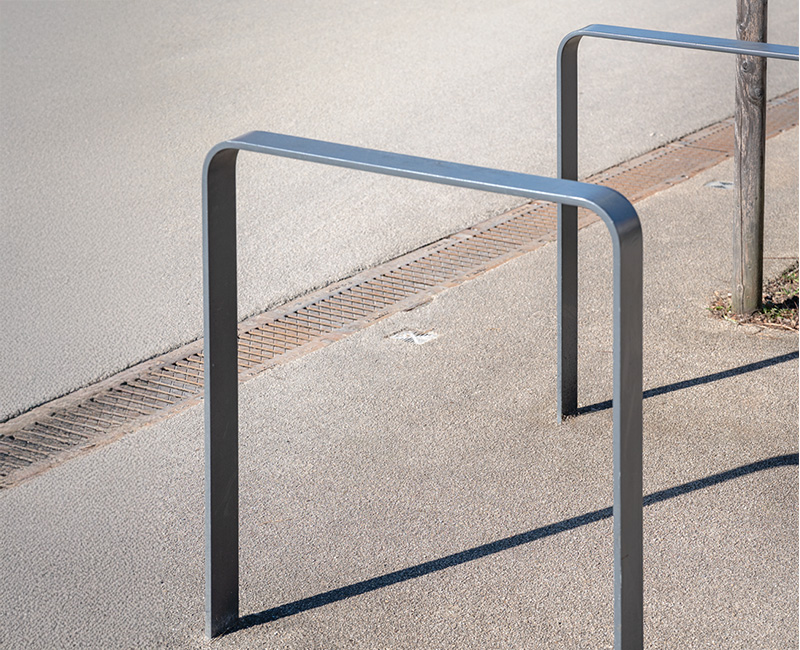
Accessible design and functional street furniture
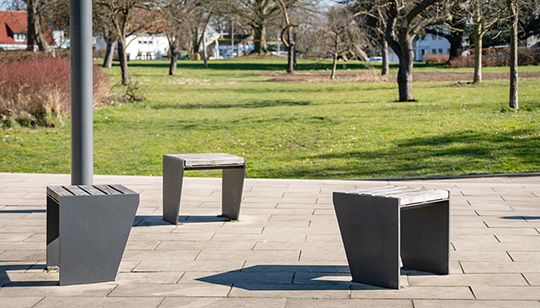
Metal strips bent and rotated by 90° provide armrests with the same look, ensuring a design suitable for senior citizens. Available as a bench with backrest and armrests or as a stool bench, the ‘Legea’ is made with a wooden seat and is extremely versatile. Thieme Stadtmobiliar developed the technical feasibility of this design and produced the elements, which are now gradually being installed in the individual construction phases. They are fixed in place by screwing them on or by anchoring them in concrete. The design language is continued with the ‘Alato’ bicycle rack. This is also made from a single piece of hot-dip galvanised and colour-coated steel.
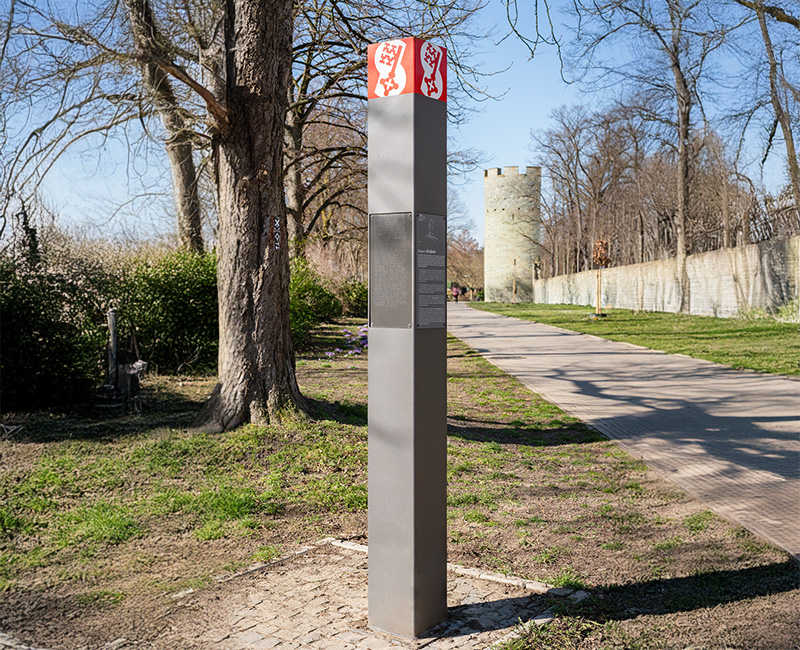
Clearly informed – design elements with added value
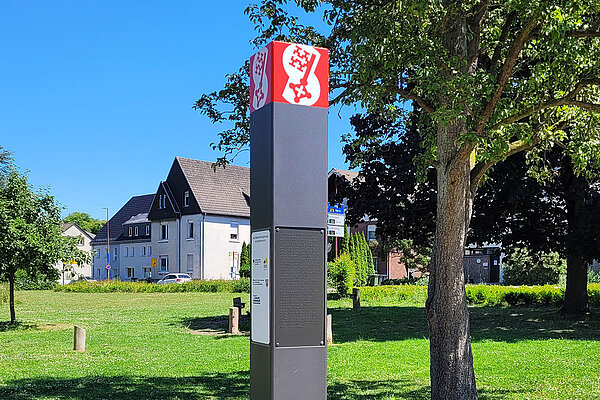
In order to not only create places to linger, but also to draw attention to the historical significance of the ramparts, uniform information pillars complement the series of fixtures. The ‘Soest’ information pillar combines modern design and functionality. It can be individually equipped with panels, providing a presentation area for city maps, event notices or tourist information. The steel material complements the other furnishings and can also be colour-coated on request. Thanks to this stele, a practical and aesthetic solution for providing information in public spaces is now available in every section of the ramparts and at the former city gates, known as gate squares.
Further Topics
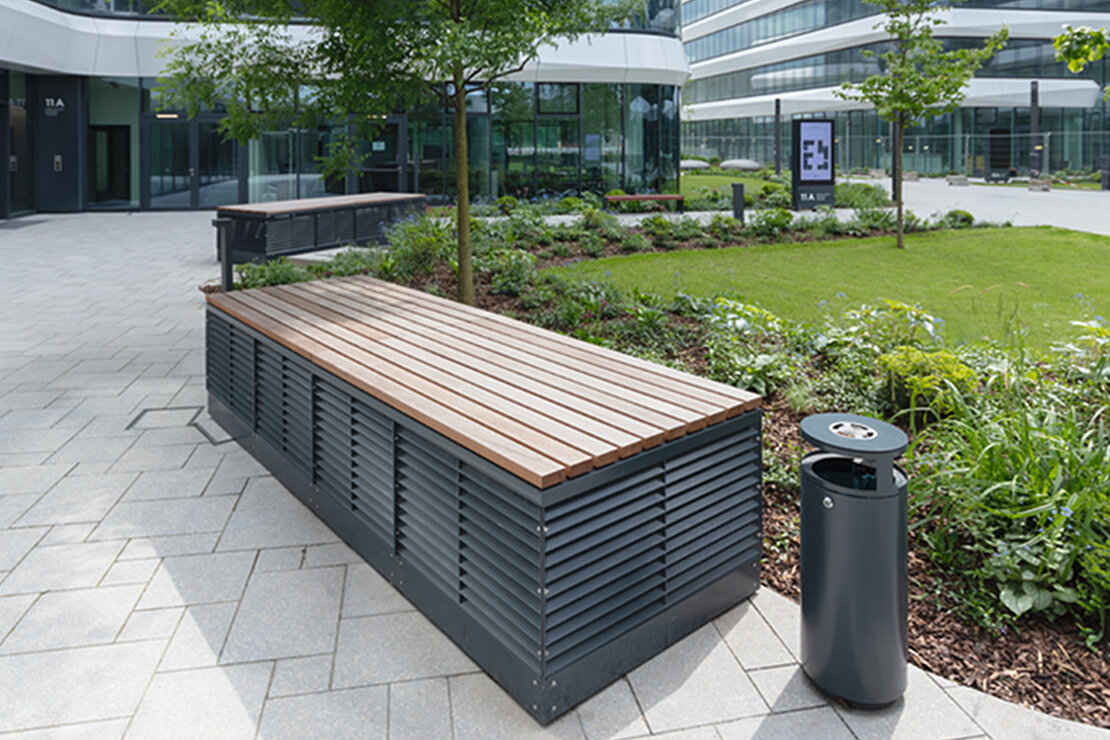
Inner-city islands - ventilation cover as seating and planter
Architects, landscape architects and property owners need to equip supply and exhaust air systems, for example in underground car parks, with covers and at the same time ensure a visually appealing design. With their simple and elegantly functional design, Thieme GmbH ventilation covers are an ideal and universally suitable solution for this, allowing the focus of attention to remain on the appearance of the surroundings. We work with you to develop customised solutions for individual seating elements or planters. In Münster, Westphalia, for example, organically shaped above-ground ventilation outlets were created for the ventilation of an underground car park, which function as seating, planters and supply units with integrated water connections.
Fotos: Stefan Brückner, Axel Hartmann